
A recent Silicon Carne clip asked a deliberately provocative question: what if Elon Musk is not winning the neurochip race?
The framing is useful because it gets attention. It is also incomplete. The most interesting question is not which founder dominates the narrative. It is more practical: when does a brain-computer interface stop being a spectacular demo and become accessible, controlled, repeatable care?
That is the useful lesson for founders and operators. In neurotech, technology alone is not enough. A product needs an acceptable surgical procedure, a clinical protocol, economic access, safety evidence, and a real place in a patient’s life.
The race is not only an implant race. It is an access race.
Neuralink is a powerful story, but not the whole story
Neuralink has made brain-computer interfaces visible to a mainstream audience. The company describes its PRIME Study as a first clinical study of its implant and surgical robot, intended to help people with paralysis control external devices with thought.
That is a serious milestone. It is also an easy story to understand: an implant, a robot, and a person regaining control of a cursor or computer.
But it should not become the only lens. There are several technical paths to brain-computer interfaces. Some are highly invasive. Others try to reduce invasiveness. Some rely on electrodes implanted in the brain. Others, like Synchron, promote an endovascular approach, placing an interface in a blood vessel near the motor cortex rather than opening the skull directly.
That difference matters. In a medical product, the best story is not always the most impressive device. It is often the best compromise between performance, risk, clinical adoption, and access to care.

Two technical paths can target the same clinical outcome: maximizing performance is not enough if surgery, follow-up, and risk limit real access to care.
What the Chinese signal makes visible
The signal relayed by Silicon Carne around Chinese neurotech projects is interesting mainly because it shifts the debate. Without a primary clinical or regulatory source, it should not be used to conclude that these actors are ahead on performance, access, or real-world adoption.
We should be careful: a short social video is not a primary clinical source. It is an editorial trigger, not sufficient proof. Specific claims about commercial approval, reimbursement, or performance should therefore be verified through medical or regulatory sources before being presented as facts.
Even with that caveat, the signal is useful. It reminds us that neurotech will not be decided only in Silicon Valley. It will also be decided by health systems able to turn a surgical innovation into a care protocol.

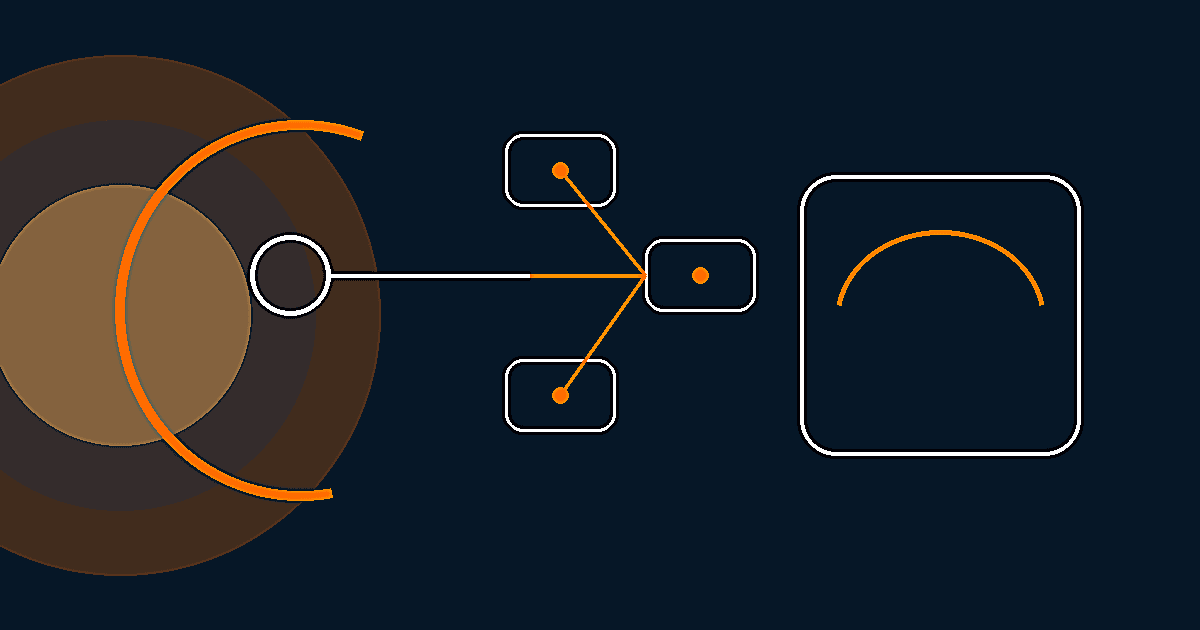
Neurotech can also be read as a systems map: research, capital, hospitals, regulation, and patient-pathway deployment capacity combine differently across regions.
The question becomes: who can move from “it works in a demo” to “it can be offered to patients, in a clear medical pathway, with acceptable cost and explicit accountability”?
The decisive point is access to care
In many AI and deeptech innovations, three levels are still confused: scientific proof, product, and access.
Scientific proof asks: is it possible?
Product asks: can it be repeated with sufficient quality?
Access asks: who can actually benefit from it?
In neurotech, the third question is brutal. If a brain-computer interface requires heavy surgery, rare hospital infrastructure, specialized follow-up, and very high cost, its impact remains limited even when the demo is spectacular.
By contrast, a less “wow” technology that is easier to implant, easier to monitor, and easier to integrate into reimbursement may have broader impact.
This is a general lesson for AI in healthcare: useful innovation is not only the innovation that impresses. It is the one that finds a path through the system.

The demo asks: is it possible? The product asks: can it be repeated? Access asks: who can actually benefit from it? That last step is often what decides the real impact.
What companies can learn from it
Even outside healthcare, this is a good lens for evaluating ambitious AI technology.
First question: what is the real adoption constraint? In neurotech, it is not only neural decoding. It is surgery, safety, medical training, accountability, and cost.
Second question: who has to change behavior for the product to work? The patient, surgeon, neurologist, hospital, insurer, and regulator are all part of the real product.
Third question: what turns a demo into durable use? Often it is not the model or sensor alone. It is the protocol, review loop, maintenance, support, and financing.
The same trap appears in enterprise AI. A demo can be impressive. But until the process, validation rules, responsibilities, and costs are clear, usage does not scale.
The real race
“Neuralink versus everyone else” is a good headline. It is not the best diagnosis.
The real race is between different ways of making neurotechnology available: more or less invasive, more performant or easier to deploy, demonstration-led or patient-pathway-led.
That is why the topic deserves to be followed beyond the spectacle. Neurochips are not only a story about augmented brains. They ask a much more concrete question: which systems can turn a technical breakthrough into accessible care?
And that question goes far beyond Neuralink.
Sources
- Silicon Carne — Pourquoi Musk perd la course aux neurochips ? — monitoring signal and editorial trigger, not a primary clinical source.
- Neuralink — PRIME Study Progress Update
- Neuralink — Trials
- Synchron — Technology
The strategic comparisons are editorial analysis. Technical or clinical claims should remain tied to the sources above; short-form/social claims are treated as signals to verify, not proof.